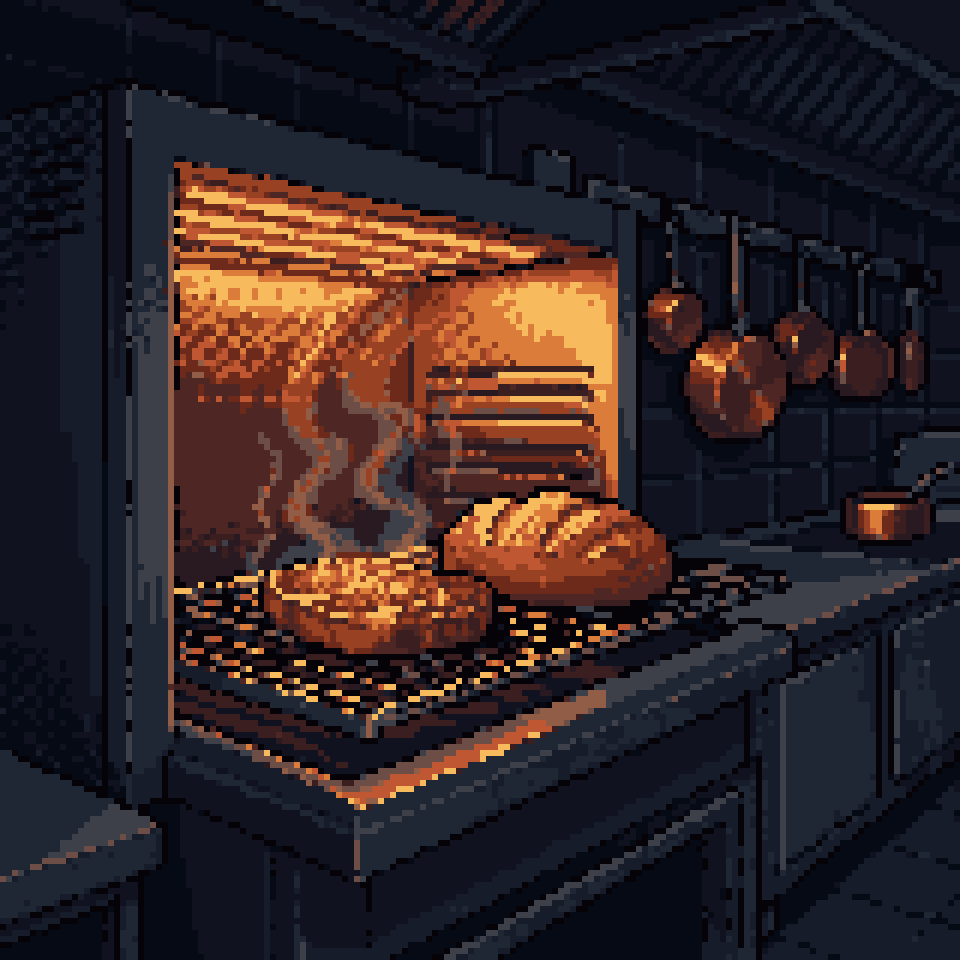
Maillard reaction
Every good crust, sear, and roast is the same chemistry. Brown = flavor, raw = bland.
Grounded in the research on Maillard reaction (Wikipedia)
What it actually is
The Maillard reaction is the browning that makes seared steak, toasted bread crust, roasted coffee, and fried onions taste like anything. It is a reaction between amino acids (the building blocks of protein) and reducing sugars. Named after French chemist Louis-Camille Maillard, who described it in 1912. It is NOT caramelization. Caramelization is sugar alone breaking down. Maillard needs protein plus sugar reacting together, which is why it produces way more complex flavor.
The mechanism, no hand-holding
Step one: a sugar's carbonyl group bonds to an amino acid's amino group, kicking out water and forming an unstable glycosylamine. That rearranges via the Amadori rearrangement into reactive intermediates. Those then fragment and recombine into hundreds of new molecules: pyrazines, furans, thiophenes, melanoidins. The melanoidins are the brown pigments. The volatiles are the smell. One reaction, hundreds of flavor and aroma compounds, all at once.